


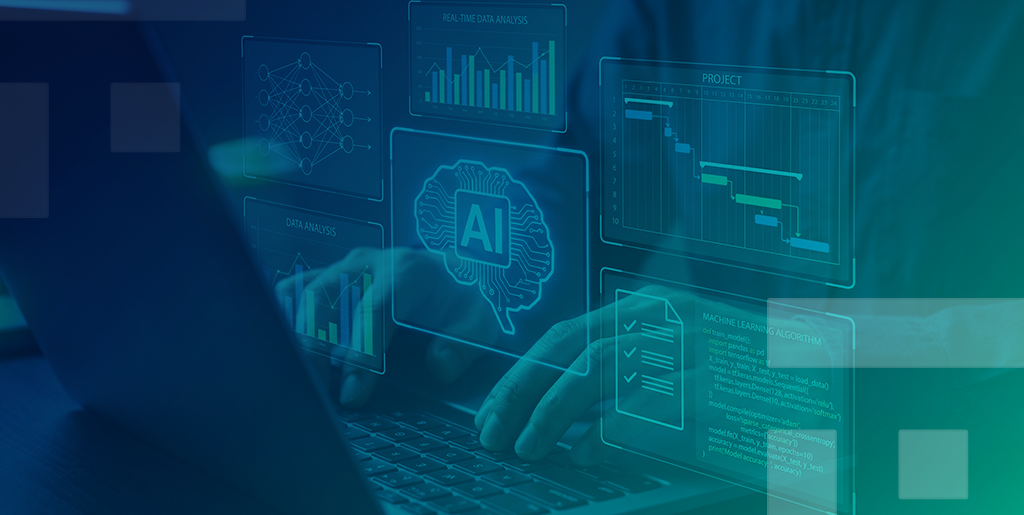
Shadow AI is the term given to the use of artificial intelligence tools by employees without approval, monitoring, or knowledge of the IT department.
Given the rapid advancement and easy accessibility of AI, this is happening right now, in real time, across a large portion of organizations, including those that already use Microsoft 365, have structured security policies in place, and believe they have full control over their technological environment.
According to the Microsoft Work Trend Index, 75% of knowledge workers were already using AI at work, with adoption happening predominantly from the bottom up, driven by the employees themselves, long before any formal policy was approved.
Let's discuss this topic further and look at the risks, vulnerabilities, and how to improve security. Read on.
The concept of Shadow IT—the use of technology applications and services without IT approval—has existed for decades.
Shadow AI is a direct evolution of this behavior, but with one critical difference: artificial intelligence tools not only store or transmit data, but also process, analyze and, in many models, use the input information as part of the platform's continuous learning.
This fundamentally changes the level of risk associated with ungoverned usage.
The reason Shadow AI is growing so rapidly is simple: the barrier to entry for using powerful AI tools has dropped to practically zero.
An employee with a personal email can access free text generation, data analysis, and automation platforms that would have been unthinkable without a budget just a few years ago.
Furthermore, adoption doesn't wait for approval; it happens between meetings, in the rush to meet a deadline, or in an attempt to be more productive with available resources.
Does this scenario sound familiar? Given this, internal security and IT managementmust raise questions: what is being entered into these tools, by whom, how often, and with what consequences?
The following scenarios are more common than companies usually imagine. They are hypothetical, however, to help you visualize them. Take a look:
An analyst needs to generate an executive summary of a revenue projection to present to the board in two hours.
The spreadsheet has 80 rows, data from multiple business units, and margins per product. He opens ChatGPT, pastes the content, and asks for a summary in business language. In five minutes, he has the text.
At no point did he consider that he had just entered confidential financial projections into an external platform, processed by third-party servers, outside of any company control.
An HR coordinator uses a free AI tool to draft termination notices, structured feedback, and job descriptions.
To provide context, they paste excerpts from performance reviews containing employee names, salaries, and disciplinary history.
The result is excellent. The risk is invisible, as personal employee data has been shared with a platform that has not been assessed for LGPD compliance.
Salespeople who realized that AI tools speed up the personalization of commercial proposals start inputting client data, negotiation history, and strategic account information to generate more persuasive text.
Every generated proposal is also a record of client information entered into an external platform, potentially violating confidentiality agreements and contractual clauses.

Let's break this down into two distinct levels: the immediate risk, related to the data entered in that specific session, and the structural risk, resulting from the lack of visibility into what is happening systematically within the environment.
Both have serious implications for organizations that take security and compliance seriously. Check them out:
· Exposure of confidential data: financial information, client data, intellectual property, and employee records entered into public AI tools are processed by third-party infrastructure, without the contractual and security guarantees of an approved corporate solution.
· LGPD violations and confidentiality agreements: when personal data of customers or employees is entered into external platforms without a defined legal basis and an established usage policy, the company may be failing to comply with core principles of the General Data Protection Law, in addition to violating contractual clauses with partners and clients.
· Decisions based on non-auditable information: when analyses, summaries, and recommendations generated by non-corporate AI begin to influence business decisions, the company loses traceability of the decision-making process. This represents a significant governance risk, especially in regulated sectors.
· Total lack of visibility: without monitoring AI usage, the IT department does not know which tools are being used, how often, by whom, or what data is being shared. This invisibility makes any incident response inefficient, as the company cannot map what has been exposed.
In Brazil, this scenario is already a concern for corporate leadership. According to a global study by SAP in partnership with Oxford Economics, 8 out of 10 Brazilian leaders are concerned about the use of AI tools that are external and lack formal approval from the IT department.
The answer to Shadow AI does not lie in blocking tools, as this is technically difficult to execute completely and creates resistance among teams that have already realized the productivity gains that AI provides.
The answer lies in governance: creating visibility, establishing clear policies, and offering secure corporate alternatives that meet the actual needs of employees without exposing the company to risk.
We have prepared some helpful tips. Take a look:
· Map current usage: identify which AI tools are already being used in the environment, by which departments, and how frequently, before defining any policies
· Establish an AI usage policy: document which tools are permitted, in what contexts, and with what data restrictions, making the rules clear and accessible to all employees
· Implement secure corporate solutions: offer governed alternatives, such as Microsoft Copilot integrated with Microsoft 365, which allow for AI productivity gains within an environment with security, compliance, and access controls
· Enable DLP (Data Loss Prevention) policies: configure rules to identify and block the transmission of sensitive data to unauthorized external platforms, using tools available in Microsoft Purview
· Train and communicate: Most employees who use Shadow AI do not believe they are doing anything wrong. Educating them on the risks and the available alternatives is an essential part of any AI governance strategy.
In fact, for companies that already have Microsoft 365, a good portion of the tools needed for this governance is already available in their current license. The problem, once again, is one of activation and configuration, not a lack of technology.
Identifying and fixing Shadow AI involves understanding how employees are using AI in their daily work, what data is being shared with external tools, which Microsoft 365 features are already available but not yet activated, and how to structure policies that balance security and productivity.
Frayha works on this front in an integrated way: we assess the current environment, identify exposure points related to ungoverned AI use, configure the DLP and compliance policies available in Microsoft Purview, and structure the implementation of Microsoft Copilot as a secure corporate alternative to the decentralized use of external tools.
This way, the company does not have to choose between productivity and security, as both can coexist when the environment is correctly configured.
👉Request a free diagnostic and discover how your company is exposed to Shadow AI.
Is Shadow AI illegal?
The use itself is not necessarily illegal, but it can lead to legal violations depending on what is entered into the tools. When personal data of customers or employees is shared with external platforms without a legal basis and a defined policy, the company may be in breach of the LGPD. Confidentiality agreements with clients and partners can also be violated. The legal risk is real and present.
Can I simply block access to AI tools?
Technically, partial blocking is possible, but rarely effective. Employees access these tools via personal devices, home networks, or mobile apps that do not pass through the corporate firewall. Furthermore, blocking without providing an alternative tends to generate resistance and keeps usage happening in an even more decentralized manner. The most effective approach combines clear policy, monitoring, and the provision of secure corporate alternatives.
How do I know if my company already has Shadow AI?
In practice, if a company has more than 20 employees and does not have a formal AI usage policy that has been approved and communicated, Shadow AI is very likely already present in the environment. A technical diagnostic can identify data traffic patterns to external AI platforms, review access logs, and map which tools are being used outside the corporate ecosystem. This diagnostic is the starting point for any AI governance strategy.
5 ferramentas de backup comparadas com critérios reais. Saiba qual protege seu ambiente, servidores e nuvem. Leia!

Does your company still trust everyone inside the network? Learn about the zero trust model and how to protect what matters. Read on!

Understand what phishing is, how it works, current AI-driven practices, and how to improve your company's cybersecurity. Read more here.

Schedule a conversation with our experts and discover how we can protect and boost your business, with no obligation.