



IT infrastructure is the foundation upon which every modern business operation is based. Without a well-planned technological base, processes fail, data is exposed, and growth encounters barriers that are hardly noticed until the problem has already caused real damage.
If you want to ensure that your business moves forward safely and efficiently, understanding, and investing in IT infrastructure becomes very important.
In this article, you will understand what makes up a robust infrastructure, what risks its absence represents, and how to plan a technological environment that scales with your business.
Keep reading!
When talking about IT infrastructure, it is common for the mind to go directly to images of physical servers, cables, and computers. But the reality is considerably broader than that.
In practice, IT infrastructure is the integrated set of technological, physical and virtual resources that support an organization's systems, services, and data. It includes hardware, yes, but also networks, cloud platforms, operating systems, software, security policies, and governance processes.
Think of a midsize company that lost access to its systems for three hours on a peak sales day.
The problem was not the employee's computer, nor the server itself: it was the absence of redundancy in the network and a clear fault recovery policy.
This is an everyday example of what happens when infrastructure is not treated as an integrated ecosystem.
A well-structured IT infrastructure is what allows the right tools to be available at the right time, for data to travel safely, and for the business to continue operating even in the face of unforeseen events.
Understanding the elements that make up an IT infrastructure is the first step in identifying gaps and prioritizing investments strategically. Each component plays a specific role and, when well integrated, they form a cohesive, safe and efficient technological environment.
See:
Physical equipment: servers, workstations, routers, switches, and storage devices, still constitute the tangible base of the infrastructure.
Even in predominantly cloud environments, hardware decisions directly affect performance, latency, and cost.
Thus, the correct sizing of these resources is critical and overestimating generates waste, while underestimating may compromise the operation.
The network is the nervous system of the IT infrastructure, as it connects devices, enables communication between systems, and ensures that data reaches its destination with speed and integrity.
Well-designed network architectures contemplate redundancy, segmentation, and continuous monitoring, preventing both operational failures and attacks that exploit connectivity breaches.
The cloud has profoundly transformed the way infrastructures are designed.
With platforms such as Microsoft Azure, for example, it is possible provision computing resources on demand, scale environments with agility and eliminate dependence on local physical infrastructure for diverse workloads.
Virtualization, in turn, allows multiple systems to operate on the same physical hardware, increasing resource utilization and operational flexibility.
Security is not a layer added to the end of the infrastructure, quite the contrary, it must be incorporated into each component from the planning stage.
This involves a firewall, managed antivirus, multi-factor authentication, data encryption, identity and access management (IAM), and real-time threat monitoring.
No matter how sophisticated the technological environment is, without well-defined processes and policies, it becomes ungovernable.
In this way, IT governance establishes rules for the use of resources, defines responsibilities, guarantees compliance with regulations such as the LGPD, and creates a cycle of continuous improvement.
There's no single infrastructure model that's right for every business. The choice between the different types depends on factors such as company size, security requirements, available budget, and digital maturity.
The three major models on the market are:
· Traditional infrastructure (on-premise): the entire structure, servers, storage and networks, is physically maintained in the company's premises.
· Cloud infrastructure: computational resources are provisioned and managed by an external provider, such as Microsoft Azure or Google Cloud, eliminating the need for local hardware.
· Hybrid infrastructure: combines on-premise elements with cloud resources, allowing each workload to be allocated to the most suitable environment for it. It is the most common model in companies undergoing digital transformation, as it allows a gradual and secure transition, preserving investments already made without physical infrastructure.
The market trend strongly points to the hybrid and multicloud model, where companies combine different providers and environments to maximize performance, security, and cost-efficiency.
Having an IT infrastructure in place is just the beginning. The continuous management of this environment is what ensures that it continues to function efficiently, safely, and in alignment with business objectives over time.
Managing IT infrastructure means monitoring the availability and performance of systems, applying security updates and patches, performing regular backups and testing them, responding to incidents with agility, controlling software licensing, and managing the lifecycle of technological assets.
But it goes beyond the technical operation, as it also involves planning the evolution of the environment in line with business growth, ensuring that IT does not become a bottleneck when demand increases.
Companies that outsource this management to a specialized partner, in the TaaS (Technology as a Service) model, are able to access qualified technical expertise without the need to maintain large internal teams, reducing costs and increasing operational predictability.
Underestimating IT infrastructure is one of the most costly mistakes an organization can make. Risks are concrete, frequent, and often silent, accumulating until a critical event forces the company to deal with the consequences.
Take a look at some risks:
Outdated environments, without adequate network segmentation, and without active monitoring are preferred targets for cyberattacks. Ransomware, phishing, and compromised credential intrusions are real threats that exploit exactly the loopholes in a poorly managed infrastructure.
Additionally, the average cost of a data breach goes far beyond the required ransom, as it includes operational downtime, reputational damage, loss of customers, and potential regulatory sanctions.
Each hour of unavailability represents unproductive employee time, uncompleted transactions, and dissatisfied customers. Without redundancy, without proactive monitoring and without continuity plans, this can culminate in the company's reputation, quality of solutions, and even business profitability.
Data is strategic assets, so the absence of robust backup policies, combined with an inadequate storage infrastructure, creates the ideal scenario for irreversible losses, whether due to technical failure, accidental deletion, or malicious attack.
In addition, recovering lost data, when possible, is more expensive. And when it's not possible, the impact can be definitive.
The General Data Protection Law imposes clear obligations on how companies collect, store, and process personal data.
An infrastructure without adequate access controls, without audit logs and without protection mechanisms puts the organization at risk of sanctions that can reach 2% of annual revenues, limited to R$ 50 million per violation.
Planning IT infrastructure is an exercise in alignment between technology and business strategy.
Thus, the starting point is always the diagnosis: understanding the current state of the environment, identifying vulnerabilities, mapping the needs of the areas and projecting how the company intends to grow in the coming years.
With this diagnosis in hand, it is possible define priorities based on risk and impact, choose the most appropriate infrastructure model (on-premise, cloud, or hybrid), select the right vendors and partners, and establish an implementation roadmap with clear and measurable goals.
Some principles that should guide any IT infrastructure planning: security by design, scalability, redundancy, and governance.
Well-executed planning transforms IT from a cost center into a growth lever and that is exactly the objective of a specialized consultancy like Frayha.

Frayha is an architect of robust, secure and future-proof digital environments. With specialization in IT infrastructure, cybersecurity, Microsoft solutions, and Technology as a Service (TaaS)), we serve companies that understand that well-structured IT is a strategic investment.
With more than 1,300 users with excellent support, more than 1,700 managed devices, and more than 180 TB of data protected in the cloud, the company delivers concrete results: more stable environments, more productive teams, and more secure data.
The TaaS model allows your company to access all that expertise without the complexity of setting up and maintaining a complete internal structure.
If your IT infrastructure is still closer to a point of attention than to a competitive advantage, now is the time to change that scenario.
Talk to Frayha's experts, request a free diagnosis and discover how to structure a technological base that supports and accelerates the growth of your business.

Learn when to hire IT consulting, the difference between reactive support and strategic maintenance, and the criteria for choosing the right partner.
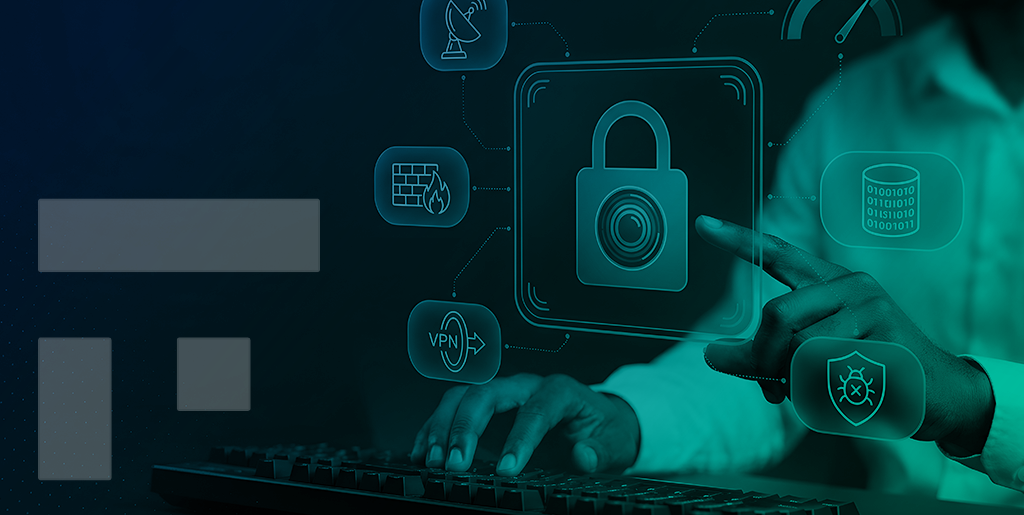
Antivírus comum não basta mais. Veja como unir antivírus, firewall e IA para proteger sua empresa de verdade. Leia!
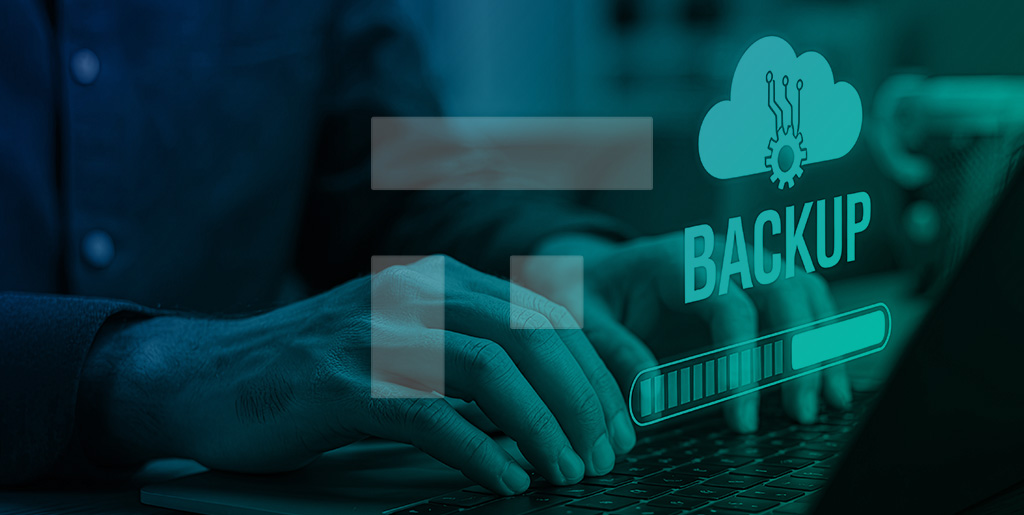
Learn the importance of cloud backup because the provider doesn't guarantee everything. Understand the real risk and what to do about it. Read on!

Schedule a conversation with our experts and discover how we can protect and boost your business, with no obligation.